
Criminal Court Cases in Power County
Power County belongs to Idaho's Sixth Judicial District. The District Court at the Power County Courthouse hears felony trials and enters felony judgments. Its Magistrate Division handles misdemeanors, traffic citations, juvenile proceedings, and the initial appearance and preliminary hearing stages of felony cases. Those early felony events can appear in the same case history before the matter moves to a district judge. Idaho does not use separate municipal courts here. Cases arising in American Falls or Rockland route into the county Magistrate Division rather than a city court file.
The Power County clerk is the custodian to contact for the filed record. A case number is the best key because it follows the matter through the docket, copy request, payment, and related jail references. Idaho criminal numbers commonly include a CR marker with county, year, and sequence elements. A party name can start a search, but it is less exact when people share names.
The prosecutor and defense offices take part in a case, but neither keeps the clerk's complete public file. The prosecutor may amend or decline an intake charge. Defense counsel may file motions. The docket is where those filed actions and court rulings come together. For a dependable outcome, obtain the judgment or a certified disposition from the clerk instead of treating a charge list as final.
Power County Criminal Court Calendars
Calendar details help a searcher identify the right division and hearing. The county publishes District Court law-and-motion matters for the fourth Friday of each month at 9:30 a.m. Magistrate adult arraignments are set for Mondays at noon, while juvenile arraignments are listed for Wednesdays at 1:30 p.m. The county also says all misdemeanor matters require an appearance. A published calendar is not a final case outcome, so confirm the current setting in iCourt or with the clerk before relying on it.
The Power County justice directory provides current court and justice-office contacts.
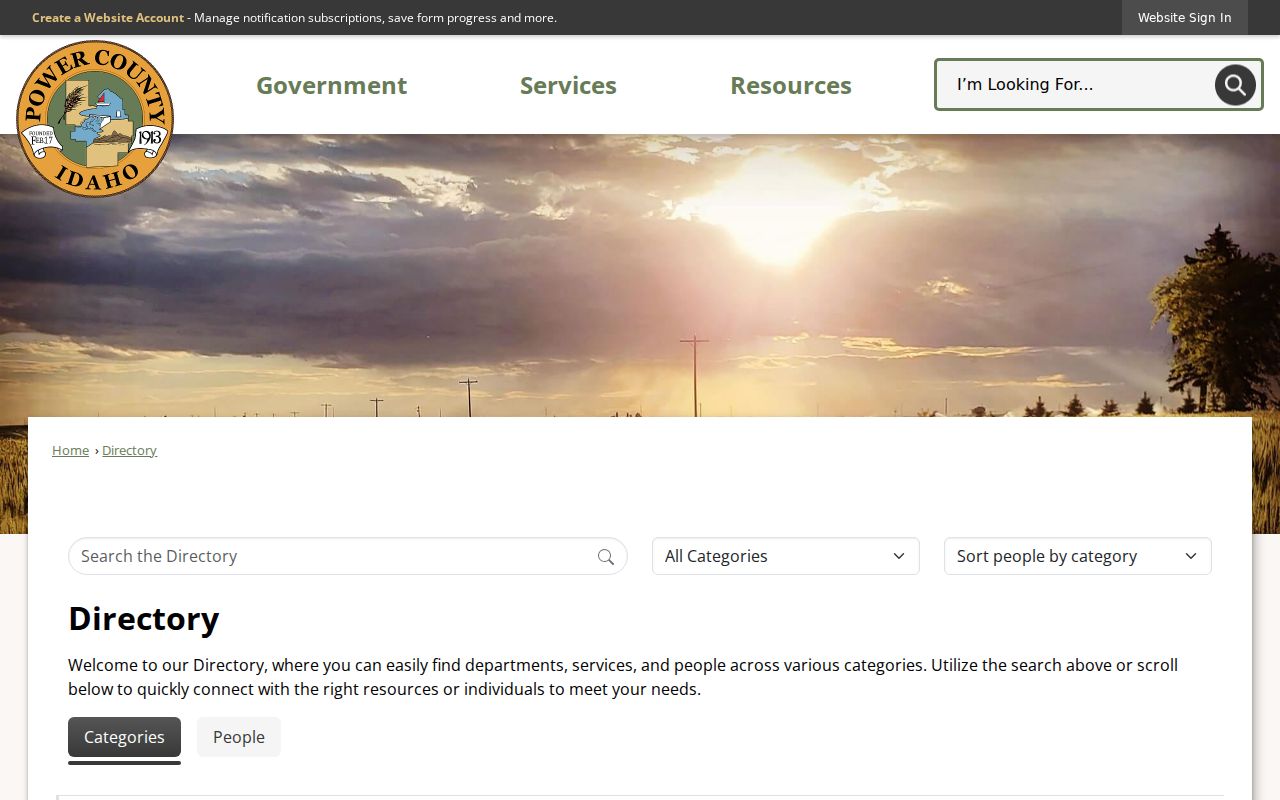
That directory is useful for routing a question, but the clerk's case file remains the source for docket entries and certified outcomes.
Power County Case Record Searches
Begin with the official Idaho iCourt Portal. Its public tools include Smart Search, Search Hearings, and Make Payments. The portal may require JavaScript, cookies, and a CAPTCHA. Idaho Courts recommends clearing browser data or rebooting when errors persist, and a desktop or laptop is preferred for payments. Treat a search result as an index to the case, not a promise that each document can be downloaded.
- Open iCourt and choose Smart Search or Search Hearings.
- Enter a party name or the exact case number.
- Use the live Power County, court, and case-type filters.
- Read the register of actions, status, hearings, and disposition shown.
- Ask the clerk for public documents, certified copies, or courthouse kiosk access.
| Field Label | Type | Required | Notes |
|---|---|---|---|
| Party or name | Text | Search option | Use spelling variants when needed. |
| Case number | Text | Search option | The strongest cross-system locator. |
| County or court | Filter | As available | Select Power County in the live interface. |
| Case type | Filter | As available | Narrow to the criminal case category. |
| Hearing search | Portal tool | Optional | Use for a scheduled event, not a final judgment. |
Power County Court Copy Requests
When iCourt shows a case but not the needed filing, use the county's 2025 court-record request form. It asks for requester details, case number or case name, case type, and the specific documents sought. Mark the Criminal checkbox, then choose ordinary documents, certified documents, or FTR hearing audio. Delivery choices are pickup, email, or mail, with postage added for mailed material. For audio, identify the judge, hearing date and type, approximate length, and requested format.
Copies cost $1 per page, and each certification stamp costs $1. Hearing audio costs $10 per CD, jump drive, and/or hearing; extra media may add cost. Payment is due when filing the request. The form states a response may take up to three business days, with written notice if as many as ten are needed. FTR audio is not the official court record or a transcript unless it is transcribed and certified under the applicable rule.
The same form covers civil and family case types, so precise choices matter. Give the case number, check Criminal, and name the filing date or document when known. A narrow request helps the clerk locate the correct item and calculate copy charges. If the goal is proof of the result, ask whether a certified judgment or disposition is the right product rather than ordering every page in the file.
The Idaho Courts records-access page explains how iCourt, courthouse kiosks, and clerk requests work together.
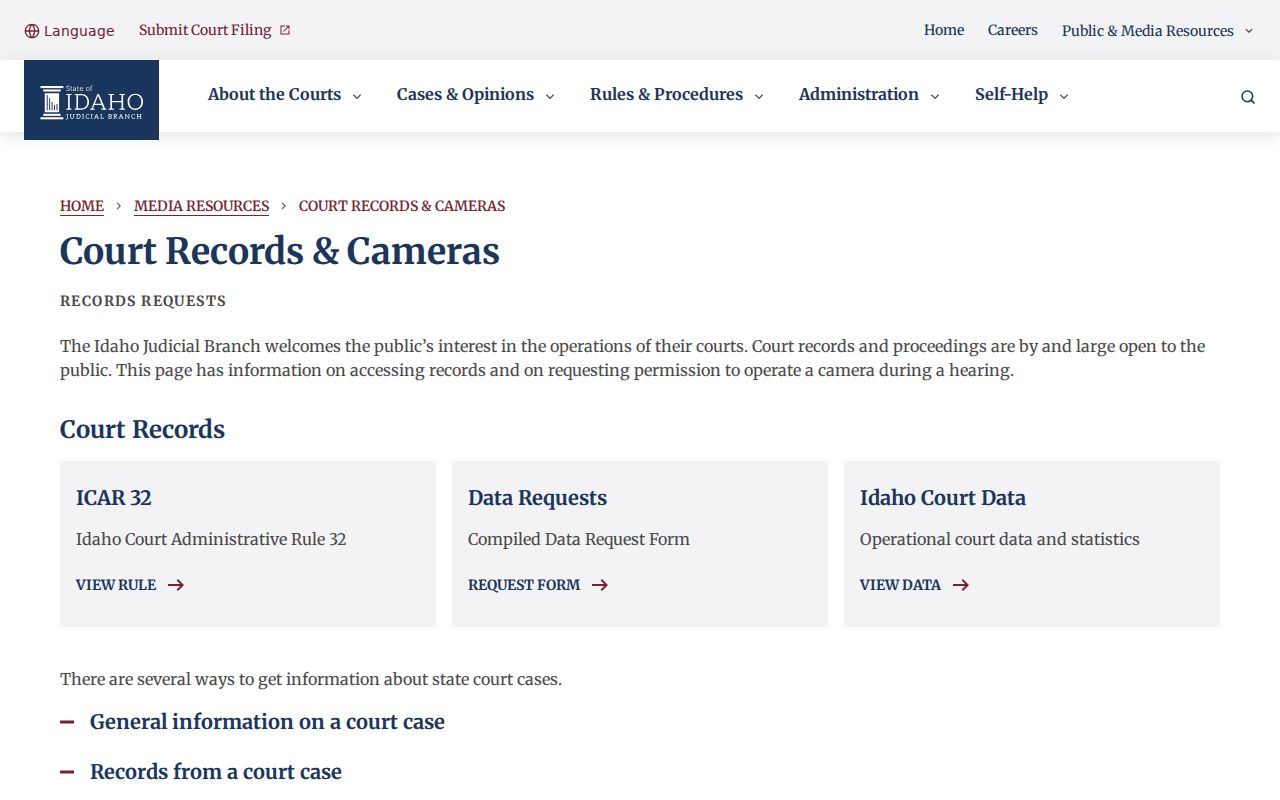
This state guidance confirms why an online index can require a second step at the Power County clerk.
What a Criminal Case File Contains
A Power County criminal case file records the judicial matter after a prosecutor files charges. It differs from a police narrative and from the jail's intake data. The docket can show amendments, pleas, rulings, and the final judgment that never appear in the original arrest entry. Compare the statute and disposition, not just the first charge label.
| Case Number & Court | Identifies the file, division, and Power County venue. |
|---|---|
| Charging Document | States the filed counts and cited Idaho statutes. |
| Docket Entries | Lists filings, orders, pleas, motions, and event dates. |
| Hearing Dates | Shows scheduled or completed court events and the judge. |
| Disposition & Judgment | Records dismissal, acquittal, plea, conviction, or other resolution. |
| Sentence & Conditions | May list custody, probation, fines, fees, and court conditions. |
Power County City Case Routing
American Falls and Rockland do not keep separate municipal court files. A citation or misdemeanor from either city routes to the Power County Magistrate Division. An American Falls police report can remain with the city police department, while the resulting charge and judgment belong at the county court. Rockland has no separate police records unit in current official sources, so its law-enforcement records route through the sheriff. In both places, iCourt and the county clerk are the court-record channels.
This split prevents a common search error. The agency that issued a citation may explain the incident, but it cannot certify the court's final result. Search the county case number, then use the clerk's judgment or disposition for the filed outcome. The city routing for American Falls record checks starts locally, but countywide court records still end at the same clerk.
Power County Drug Court Records
Power County Drug Court is a named local specialty program established in 2000. It joins Sixth District courts with county probation, prosecution, defense, and treatment services. The court-ordered program uses five phases and is estimated to last 18 to 24 months. Services can include group and individual work, random testing, home visits, and structured therapies. Sanctions range from community work or discretionary jail to termination and execution of a suspended sentence.
Participation can create docket events, orders, and supervision entries, but treatment and medical details may remain confidential. The Power County Probation Services page describes the local office that supervises adult misdemeanor probation, juvenile probation, and pretrial release.
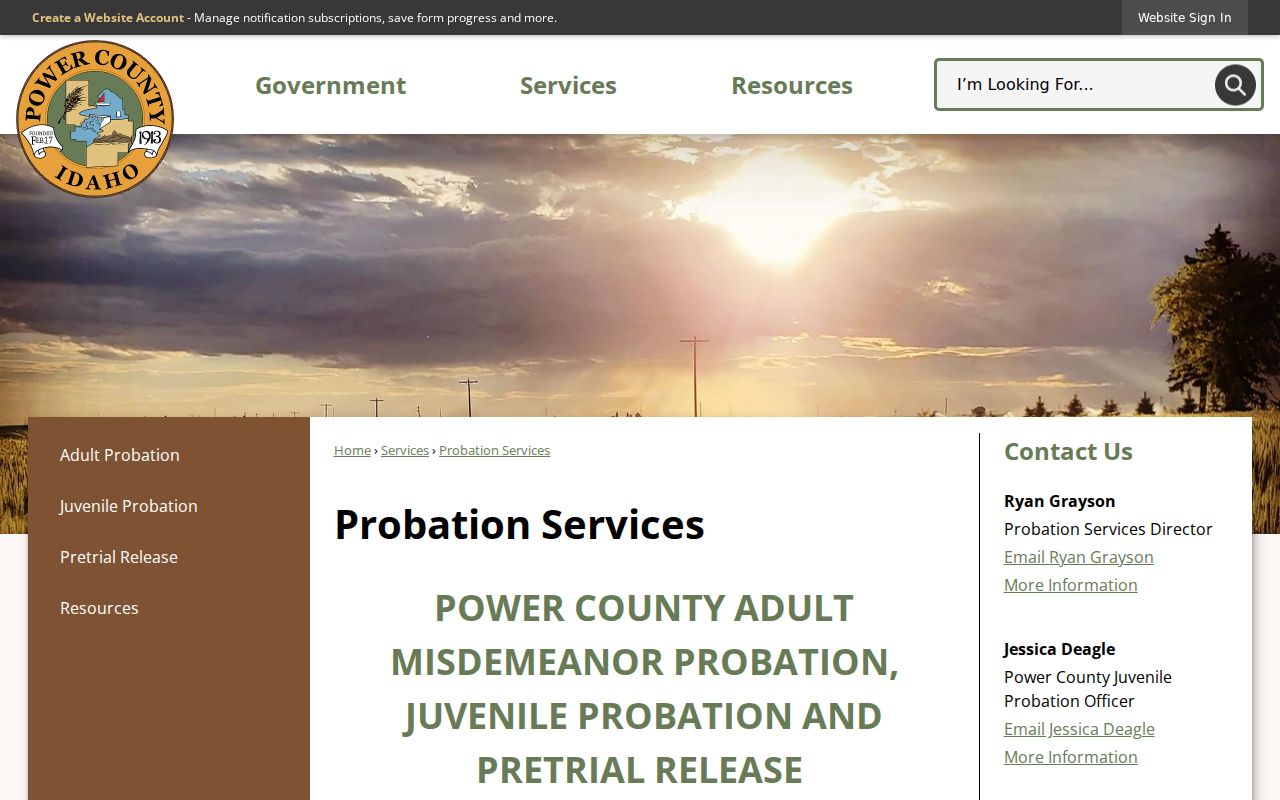
The image marks a separate supervision layer. It should not be read as a substitute for the clerk's complete criminal docket.
Criminal Case Stages in Power County
A case file begins when the prosecutor files a charge, not merely when law enforcement makes an arrest. The Magistrate Division handles arraignment and the early felony process. A felony can then proceed in District Court for pretrial motions, a plea or trial, judgment, and sentencing. A misdemeanor ordinarily remains in Magistrate Court. The register of actions is the running timeline; the judgment and sentence supply the outcome.
Case flow: Charges Filed › Arraignment › Pretrial › Plea or Trial › Disposition › Sentencing
Idaho has no universal A, B, and C felony classes. The charged statute controls, and a booking label may change before judgment. The Power County arrest search can help locate the custody event, while the court case supplies the filed charge and result.
Federal Cases Outside Power County Court
A federal crime arising in Power County does not create a county clerk file. It belongs to the U.S. District Court for the District of Idaho. PACER requires registration and charges under its current federal fee schedule. Its Case Locator can identify the federal court and case number before the user opens the docket. Paper and certified federal records must be requested from the federal clerk.
The District of Idaho court site publishes federal calendars, locations, rules, and records information.
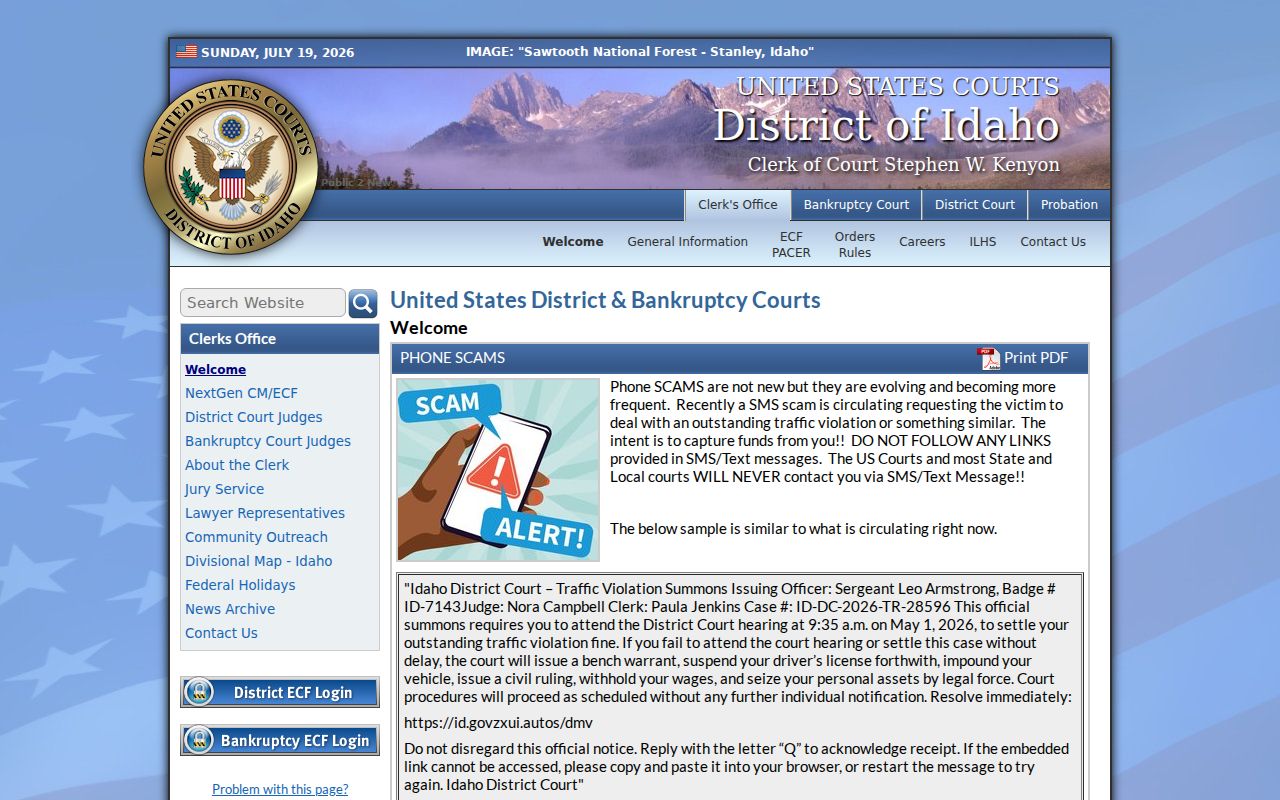
That court is distinct from both divisions at the Power County Courthouse. For docket access, the official PACER service is the federal counterpart to the state court search.
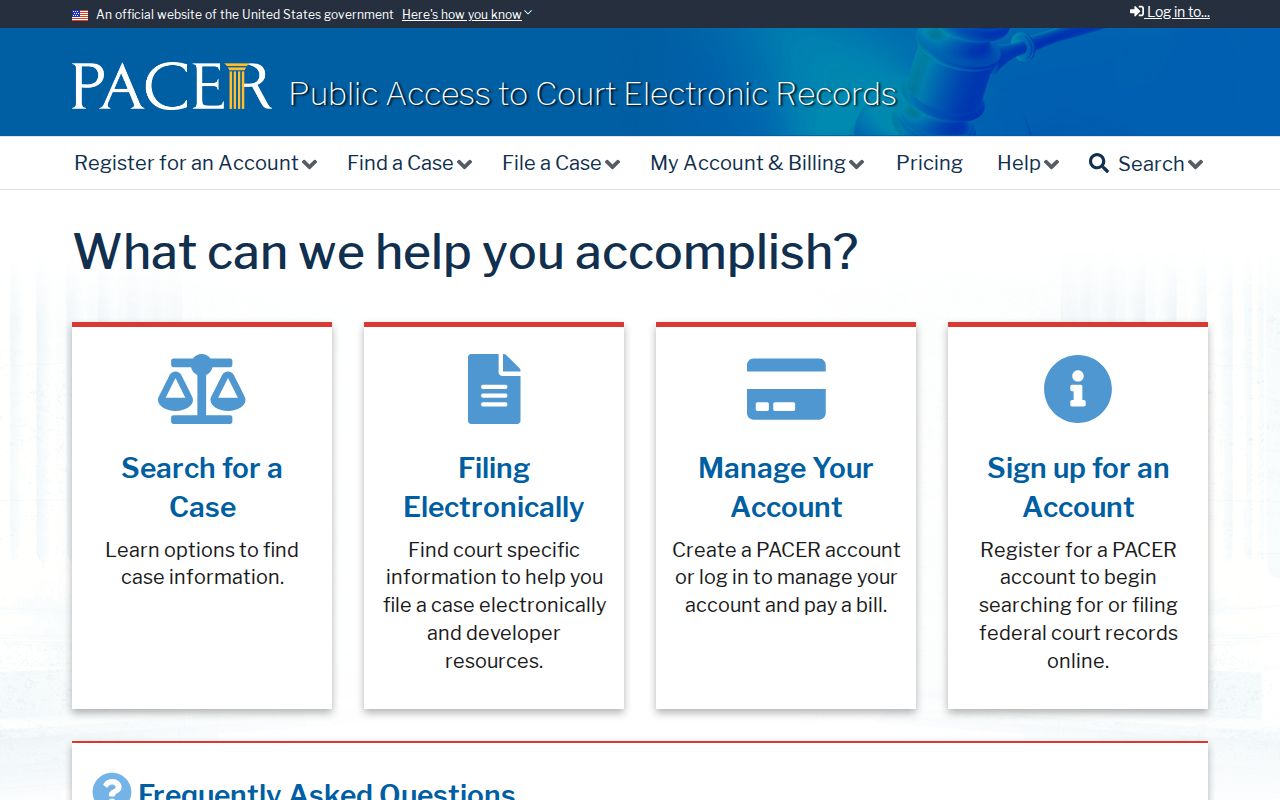
PACER does not contain ordinary Power County District or Magistrate Division cases.
Access Rules for Case Records
Idaho Court Administrative Rule 32 governs judicial-record access. It separates public court records from confidential or administratively restricted material and sets procedures for sealing, unsealing, and compiled access. Juvenile records, victim-sensitive details, medical information, presentence and risk assessments, unreturned warrants and supporting affidavits, and sealed documents may be withheld. Social Security numbers, financial account data, and other protected identifiers can also be redacted.
A sealed case or event may not appear in public search. Idaho's rule can still leave the order sealing the record public while hiding the sealed events. If a Power County case is missing, ask the clerk whether the search terms are wrong, the record is only at a kiosk, or access is restricted. The reason-and-relationship field on the court request form is used when someone seeks sealed or confidential access. A request does not override the governing rule or a court order.
Court access and BCI dissemination are also different systems. Idaho State Police BCI holds fingerprint-supported state criminal-history data, while the clerk holds the judicial file. A dismissal can appear in one system only after the disposition is reported. When records conflict, compare the certified court disposition with the arresting agency and BCI entries, then seek correction from the office that owns the inaccurate layer.